Showing posts sorted by relevance for query colorism. Sort by date Show all posts

Saturday, 6 October 2018

Colorism


Colorism can be defined as the discrimination of someone based on their skin complexion. This usually occurs within people of the same racial group. Colorism is prominent in black and Asian communities. I am mainly going to focus on colorism in the black community, particularly against black females. I have addressed this topic in previous blog posts but want to dissect this topic on a deeper level.

Recently the rapper Ghetts made a tune called 'Black Rose' which addresses the issue of colorism. I will quote some of his lyrics throughout this post.

The genesis of colorism occurred when Europeans colonised numerous countries where the native people were of a darker complexion. There was also the enslavement of African people. During this time, Europeans imposed their white supremacist ideologies and beliefs on the native people. This included the belief that white women were the epitome of beauty and femininity whereas darker women were not.

We have been conditioned to believe that the closer you are to whiteness, the more beautiful you are. We are also taught that dark skin, kinky hair and African phenotypes are “ugly”. In our communities mixed raced women (black & white) or light skin black women are deemed to be more beautiful. This is due to their proximity to whiteness. The more white you look the more beautiful you are, the more black you look, the uglier you are. That is why females who have lighter skin, lighter eyes, looser textured hair and European features are deemed more beautiful by society's standards than those who look more "black". There also seems to be a fetishisation of mixed people. There are even people out there who purposely choose partners that will give them mixed race children.

"they’ll be brothers same colour as her Pappa who will not be showing any sort of interest"
What saddens me is that many black men perpetuate and reinforce this narrative. They make comments such as “dark skin girls are ugly” “I only like lighties” “I only date light skin women” (things I've heard first hand from dark skin men). Many black men in music praise lighter skin women and make references to this in their rap lyrics . Some black men say that light skin females are just their preference, but the question is where did this preference come from? Why do some black men only see beauty in lighter shades and not in darker shades? How can a dark skin black man look at a black women of the same shade and have the audacity to say that he could never date her because of her skin color? This is clearly a sign of internalised self hatred because he refuses to date a woman who is a reflection of him.

"Disrespecting women who remind them of their mothers...sisters...cousins"
There is also the normalisation of disrespecting dark skin black women. There seems to be a trend of people whose old tweets come to light when they had said very disrespectful things about dark skin black women, but then justify it by saying “I was young” . This is not an excuse. Why is it that it is a "phase" to disrespect black women? why are people so comfortable with disrespecting dark skin women? why is it acceptable? this should never be normalised. There seems to be a hatred towards dark skin women in society (I talk more about this my blog post 'Misogynoir')

"These Kayne's have not become important to the Kim's yet"
In the media we constantly see successful Black men parading their light skin or non black partners more than we see them parade a dark skin partner (though there are some that do). It seems that amongst some black men having a lighter skin partner is a trophy. There are some black men who desire mixed/light skin women over a dark skin woman. This constant portrayal makes some dark skinned women feel undesirable and unattractive. I'm sure there are many dark skin females who have experienced being overlooked by guys for their lighter skin friend.

"Brothers back home using cake soap"
There is also light skin privilege, in the entertainment industry it is evident that lighter skinned women are more successful than their darker skinned counterparts . Beyoncé's father had stated that part of Beyonce's success is due to her being light skin. Most black women who are at the top tend to be of a lighter complexion. It is much harder for a dark skin women to achieve the same level of success despite the hard work they put in. Having lighter skin gives you more opportunities. Therefore, some people try to obtain this standard by lightening their skin to fit into society's standard of beauty.

"So who’s fighting for the sisters then? When their own brothers keep on dissing them"
When black women try to speak out about colorism we are told that we are bitter and angry. Our feelings are dismissed as if our experiences aren’t important. We are not “angry” women, we are hurt and trying to explain how we feel. We have emotions, we feel pain, we feel hurt we feel undesired. We live in society where being black and being a woman makes us deal with discrimination at a higher rate and puts us as the bottom of western society's totem pole. But some black men are not willing to listen and actually understand where we are coming from. From what I've seen, black women tend to defend black men more than black men will defend black woman. This is why I respect Ghetts for making Black Rose as it highlights the colorism issue in our community. Hopefully, it will challenge the thinking of black men, especially those with colorist ideologies.

"I love all types a women, Variety is ok"
I see beauty in all shades of women. I am not against black men dating lighter skin women, I only have an issue when black men refuse to see the beauty in women share their complexion and put them down while uplifting lighter skin women.

"Eww his black and his ugly Naaaahh I’m black and im lovely"
Dark skin is beautiful skin, black people should not put down another black person just because their skin is darker. There is no such thing as being "too black" or being "too dark", if you believe there is then you are clearly part of the problem and a colorist. We need to embrace ALL shades of black within our community and help to uplift and support each other.

So to my dark skin queens out there:

"No matter what they say you are beautiful"

Monday, 2 December 2013

I'm not African!

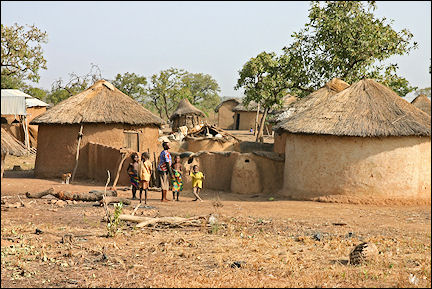
Africa aka the Motherland, where life began. However the depiction of Africa and its people are usually negative. When some people think of Africa they think of this:


Africa seems to be synonymous with poverty and hunger. Yes there are Africans that live in poverty but it doesn't mean that the WHOLE of Africa is like that. The same way not everybody in Europe is rich.  The Western media has been consistent in portraying ONLY the negative aspects of Africa which influences people's perception of the continent. Because of this negative perception some people do not want to be associated with Africa. I have come across people of African descent who deny their African roots or take it as an insult when they are called African. There are black people who will state how they are mixed with Latino, Asian or White, which is not an issue but then say it like it is a badge of honor as if being mixed is better than being just "black". Even when it comes to beauty some of our standards are distorted. With the European standard of beauty certain African features are viewed as ugly such as having dark skin, kinky hair, flat nose and thick lips.This reminds me of Malcom X's speech "Who taught you to hate yourself" This ideology has also affected some black communities where being a lighter skinned black person with more European like features seems to be viewed as more attractive. Unfortunately the issue of Colorism (the whole light skin v dark skin issue which has its roots in slavery and colonization) is still prominent.

Can we blame people for having this mentality when it is something they have been fed with for years by society? especially by institutions such as slavery, colonization, religion and the education system

During the trans-atlantic slave trade Christianity was distorted and used as a tool to justify the enslavement of black people. The story was called "The curse of Ham". This story talks about when Noah was drunk and his son Ham saw him naked. Ham went and then told his brothers who then covered Noah's nakedness. Because Ham didn't cover his fathers nakedness  Noah cursed Ham's son Canaan  (so far this is all in Genesis 9, now here is when the distortion comes in) As a result of this curse Hams descendants had blackened skin. Therefore having black skin was seen as a curse.

Even in the education system when we are taught about black history we are mostly told that Africans were slaves, but we are never taught about African Kings and Queens. They never tell you that Africa had some of the most powerful empires in the world such as the Ghana Empire and Mali Empire. They never tell you that the worlds very first university was in Africa, The University of Timbuktu in Mali which taught sciences, maths, geography and medicine in the 12th century.They never tell you that some of the greatest inventions such as the clock, traffic light, mobile phone, typewriter etc were created by people of African descent.

Africa is a land rich in culture, music, dance, art and history. Never feel ashamed whether you come straight from Africa, or you are a descendant of enslaved Africans, or you're part of the African diaspora. You should never allow yourself to feel ashamed or inferior because of your African heritage. The language you speak, the food you eat, the way you look should not make you feel less than your European counterparts. The world would not be what it is today without the contribution of Africans.

I am pro black and believe that in God's eyes all humans all equal, our differences make us unique and beautiful. I believe that the years of racism, degradation, oppression and  brainwashing that countless black people have endured has caused an inferiority complex within the minds of many black people. I want to uplift those who are a victim to this and do not know and understand the true beauty of their African roots. As Marcus Garvey said "A people without knowledge of their past history, origin and culture is like a tree without roots". I have been doing research into African history and will be doing a blog post series on it. Here are a couple of pictures of the Africa they never show you


Nairobi
Ghana


Thursday, 24 September 2020

The Legacy of white supremacy


In a previous post the History of White Supremacy I discussed the history of white supremacy which you can read here. This post is a continuation of my previous post which will explore the legacy of slavery and colonisation in todays society,

1. Religion

Europeans forced Africans to convert to Christianity and demonised African religions. They used images of a white Jesus for Africans to worship. This is psychological oppression. If you believe that God is white, you will subconsciously believe that white people are superior and that a white person is your saviour. Further, you are  less likely to rebel against your white oppressors as you would believe that harming your oppressor is harming God. Christianity was used to make enslaved Africans passive, they were taught to "obey their masters" "turn the other cheek" and endure hell on earth so that they would go to heaven when they die. There are many black people today who still worship white Jesus. My mum told me of  a saying in Ghana which states that "if you see a white person you don't need to go to church because you have met God" This is very damaging, this brainwashing has led to some people of African descent today seeing white people as more superior to them. Black people need to see themselves as Gods because we are. The human race came from us therefore we are Gods.

2. Beauty 

Africans were taught that their features were ugly, such as their hair, skin colour, facial features etc and being white was the standard of beauty. Therefore anything close to whiteness was seen as more attractive. This has caused black people to hate themselves and their features. This also birthed colorism which exists heavily today. I wrote about this in more detail here.

3. Education

I went to school in the UK where the education system, is very whitewashed. We were never taught about the great achievements of black people. We were taught about "great" Europeans, and the British Empire. In regards to slavery we were never taught about slave rebellions, only that Africans were slaves. We were not taught about the great African empires,  we were not taught about African civilisations apart from Ancient Egypt, however we were taught that Egyptians were not black (when they clearly were). We were not taught what Africans have achieved and contributed to the world. We were not taught about inventions created by black people, we were not taught about black royalty. This is miseducation, so that black people do not feel pride in themselves but are conditioned to see white people as greater than them. That is why I always advocate for black people learning their history because our history is very rich and many of our people have achieved great things.

4. Media

Black people are usually portrayed negatively in the media. There used to be minstrel shows (started in the 1830's), where white people painted themselves in blackface to represent black people in a negative light. Black people were usually protrayed as dumb, lazy and criminal. There were also cartoons portraying African people as cannibals. 

We know that the media can be racist. Black people are usually portrayed negatively, black men are usually portrayed as violent , criminal and hyper-masculine. Black women have historically played the role of the "mammy", the Jezebel (promiscuous woman), the slave or the side kick to a main white character. The first black woman to win an Oscar played the role of a mammy.  We never see too many positive representations of black people and if we do, there are only a few.


In music, there are black artists who rap about about murdering other black men, glamorise criminal behaviour, consumerism  and hyper sexualise and disrespect black women . This is detrimental to our community. A lot of our music is negative and this is what the white record labels want to promote. Unfortunately, a lot of black conscious artists who have positive content are not promoted or signed by these same labels. These labels want to push a negative narrative in the mainstream, why should our demise be the entertainment of others? this is not right. Black artists should stop allowing themselves to be used to promote negativity in our community


5. Criminal Justice system

In the UK, black people make up 3% of the general population but 13% of the prison population. In the USA black people make up 12% of the general population and 40% of the prison population. In the UK black men are 4 x more likely to be stopped and searched that their white counterparts. Black  people are not necessarily more criminal than white people. Black communities tend to be be poorer and poorer areas tend to be policed more and targeted than more wealthy communities. This leads to higher statitsics. Black young men especially, tend to be viewed as criminal. In courtrooms black people are more likely to be convicted and sentenced more harshly. In Ava Duvernay's documentary "13th" she explores the school to prison pipeline in the USA, and how privately funded prisons make money depending on the number of inmates they have, the more inmates, the richer they get.

6. Economics

Black people are economically the poorest in the world compared to other races. Majority of the poorest countries in the world are found in Africa. This is due to Africa being looted and exploited by the West and corrupt African leaders. Black people living in the diaspora tend to collectively be the poorest group in the countries they live in.  There are 2000+ billionaires in the world. Of this only 13 are black. The wealth disparity between black people and other races is huge. Black people need to become independent, especially black countries. They need to work together, black communities need to practice group economics so we can thrive as a race.

Saturday, 15 October 2016

Embracing the melanin

After having an interesting conversation with my brother we've noticed that over the past few years this current generation of the African diaspora are embracing their african roots and black identity. For example, the rapid growth of the natural hair community especially on platforms such as youtube (I'm 4 years natural! :)) where it is about taking care of your natural hair, rocking your Afro and wearing protective styles such as bantu knots. There has also been a dramatic increase in the type of hair products which are specifically made for natural hair. I never knew how to maintain my natural hair, hence the reason I used to relax my hair because I found it easier to maintain. Due to discovering certain YouTube channels  I now know how to look after my natural 4c hair and which type of products to use. I never see myself perming my hair again. Afro hair is beautiful and versatile. Even though living in the western world where having straighter longer hair is viewed as "better" it is a mindset which is shifting and can be seen in the decline in sales of hair relaxers. There is still an issue of whether black hairstyles are seen as appropriate in schools and different professions. Not too long ago a 13 year old south african girl who has a big beautiful Afro was told by her school that her hair was inappropriate. It is unfortunate that the hair that grows out of head is viewed as inappropriate especially in Africa.  There have also been many stories of black people who are told to change their natural hairstyles at school or at work. Despite these things happening I do believe that peoples attitudes are changing in regards to black natural hairstyles .As someone who works in the Legal profession I have come across black lawyers with afro's and dreadlocks which shows that there is more of an acceptance to these hairstyles.

African clothing has also become very popular. In real life and on social media I see more people wearing Ankara fabric with a modern twist to it. There is also a trend of people wearing Dashiki's. There are many African Americans including  celebrities who wear them. I see them all over Instagram and it makes me happy seeing people trying to connect with their African roots.There is also a growth in the popularity of kente cloth (which originates from my homeland of Ghana) and there is a swimsuit line by Red Sta® collection which specialises in selling kente bikini's. However there was an issue with some Africans saying African Americans are appropriating African culture. This is something I wholeheartedly disagree with. African Americans are also Africans and you can not appropriate what is your cultural heritage. African slaves were robbed of their African culture but it doesn't' mean that African culture is no longer theirs. Slavery did cause a disconnect between African Americans and Africa but by them trying to reconnect that bridge is a positive thing.

One of my favourite things is the big embrace of dark skin women which I am loving (I am biased because I am a dark skinned woman myself) there are plenty of Instagram pages dedicated to dark skin women and the term "Melanin" is used everywhere. For a very long time (and still continues today) dark skin has been viewed as ugly in many cultures all over the world. This was caused by white supremacy during slavery and colonisation. People of colour have been conditioned to think that lighter skin equals beauty. In some cultures people of lighter skin are given better opportunities and given positions of power compared to their dark skin counterparts. Colorism is very real (just research the Indian cast system). Some people choose to have children with lighter skinned people just so that their children can come out fairer skinned. This is such a negative mind set to have but unfortunately is the world we live in. I do believe that some progress is being made, when Lupita Nyongo became the Hollywood "it" girl it showed that a dark skinned African women can also be viewed as beautiful by society. She gave hope to many of the black women who look like her.  I support any movement which encourages dark skin women to love the skin their in.


Being black and being a women in a society where white  men tend to be at the top, it can be difficult to see value in yourself. We are told how we should look and not to be our true authentic selves. I am glad that in this generation (which reminds me of the 1970's black power era) people are apologetically embracing who they are. Despite society having conditioned people to think that anything associated with Africa is negative it is a mindset which is reversing. African culture is becoming more mainstream and accepted whether it be products (african black soap, shea butter), clothing, music etc. I am completely here for it and hope it continues.

Saturday, 20 March 2021

Erasing blackness

About a month ago I saw a post about Rochelle Humes, who is a mixed race British singer, talk about presenting a documentary which explores why black women are 4x more likely to die from childbirth than white women in the UK. I was happy to see that a documentary was being made about this subject, so it can bring this issue to light. The next day it came out that Candice Brathwaite, a dark skin black British woman was suppose to host a documentary about the same topic, however this was no longer going ahead. Unfortunately, this concept is not new. Mixed race women are usually used as the face of Black women.

Mixed race women are seen as more palatable to the wider white audience due to their proximity to whiteness. I remember being young and watching black sitcoms. I noticed that when there was a black family, the daughter was usually mixed race, however the sons were always unambiguously black. I did find it strange and wondered why they didn't use a black female actor.

The identity of mixed race people varies between cultures. In the UK people who are biracial are called mixed race. In my country of origin, Ghana, most Ghanaians refer to them as Obroni (white person), in South Africa they are referred to as 'colored' and in the USA, due to the racist one drop rule they are classed as black. As someone who was raised in the UK I see them as mixed race, they are both black and white, not just black. I think it's disingenuous to expect mixed race people to ignore half of their DNA and  only claim their black side. I think this is dangerous as it erases monoracial black women. Further, this causes spaces which should be given to black women more likely to be given to those who are of mixed race. An example of this is when Zoe Saldana who is a mixed Latina actress portrayed Nina Simone, a monoracial black singer. They had to darken Zoe's skin, and make her wear prosthetics to give her fuller black features. There was of course a lot of backlash regarding this. There are plenty of black actresses that they could have easily been cast to play Nina Simone.


The average black woman does not look mixed race (though there may be a few that do). When it comes to representation, it is important for black women to see people that look like them that they can identify with. A lot of high achievers that we see that are the "first black X" are usually mixed people. Look at Barack Obama, the first "black" president in the USA, born to a white mother and Kenyan father and was  raised by his white grandparents. If both of his parents were black I doubt he would have have been able to become president. Halle Berry another mixed person, was the first black woman to win an Oscar for best actress. Even looking at Meghan Markle, despite the racism she is going through, if she was a monoracial black woman she would not have been allowed to even marry Prince Harry. It is easier for mixed race people to enter certain spaces than it is for monoracial black people.

Though the experience of mixed race people and black people do overlap a lot , they will never be the same. I do not doubt that a lot of mixed race people have experienced racism like many black people, but they do benefit from colorism unlike darker skinned black people. I cannot tell a mixed person how they should identify because I myself aren't mixed, and I haven't gone through their experiences. They should be able to have their own spaces and black people should also be able to have theirs. We should be able to recognise that we do have our differences but yet  support each other. There are many mixed race people who have made contributions in speaking out against injustice against black people, look at Bob Marley, even in modern times Colin Kapernick has done a lot for the black community and one of my faves is Akala. This post is not about causing division. We live in a patriarchal world which benefits men, do I hate men? No . We can recognise that someone who is different from you has more privilege, it doesn't mean that you hate them or segregate from them. I believe  that those that have certain privileges over others should use their position to help those who have less privilege than them. For example if there is a role for a black person and you are mixed and have been given that role you should speak out and demand that it is given to black person. We still do have a long way to go when it comes to black representation, especially of black women but I do believe we  can make change.